
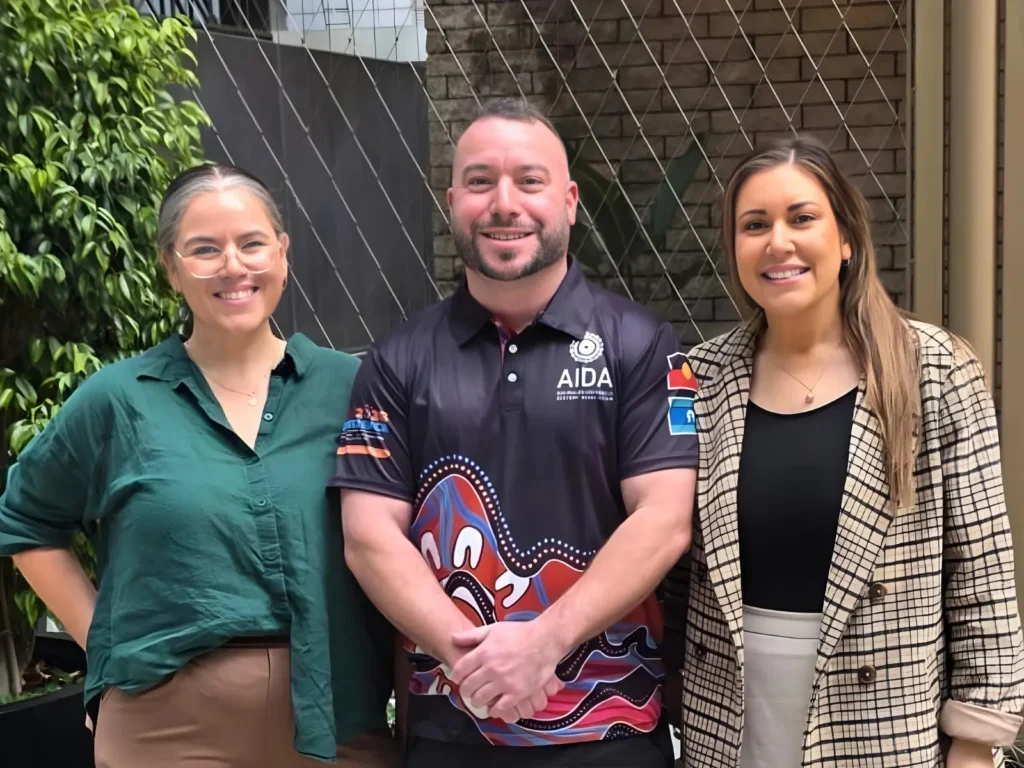
A new Medical Journal of Australia paper challenges medical schools to look beyond accreditation compliance and consider the deeper institutional transformation required to advance First Nations health and cultural safety.
Responding to the Revised First Nations Health and Cultural Safety Accreditation Standards in Australian Primary Medical Education: Institutional Principles and Qualities for Meaningful Progress, by Sophie Pitt, Ashlee Williams-Barnes, Ryan Dashwood, Keira Edwards and Paul Saunders, responds to strengthened expectations within Australian medical education.
The authors argue that meaningful progress cannot be achieved through curriculum additions alone. Rather, medical education providers need to critically examine their underlying values, ways of knowing and institutional structures, including whose knowledge is recognised and where decision-making authority sits.
At the centre of this work is First Nations self-determination, supported by qualities such as humility, courage, accountability, responsiveness, and perseverance.
As the authors explain:
"We wrote this paper to challenge the reliance on performative allyship and performative compliance visible only at accreditation time. We want medical school leaders to understand that surface-level curriculum additions are insufficient for genuine transformation. Meaningful progress requires genuine, reciprocal partnership-building, with First Nations Communities positioned as experts in their own health and well-being. Ultimately, we are asking institutional leaders to cede space, prioritise First Nations self-determination, and embed robust First Nations governance to lead this essential work.”
The University of Wollongong team’s curriculum work provides one example of how these principles can be enacted through local relationships and place-based learning. Students are supported to contextualise health data, understand the continuing impacts of colonisation, learn alongside Community and apply their learning through authentic assessment, yarning and critical reflection.
The paper ultimately asks medical schools to consider more than where First Nations content appears within a curriculum. It asks institutions to examine whose knowledge is valued, who holds authority, how First Nations governance is embedded and whether institutional structures genuinely support self-determination and reciprocal partnership with communities.
For medical schools responding to strengthened accreditation expectations, the message is clear: accreditation may create an impetus for action, but meaningful progress requires sustained commitment and institutional transformation led by First Nations knowledge, expertise and governance.
Pictured from left to right: paper authors Sophie Pitt, Paul Saunders and Ashlee Williams-Barnes.