
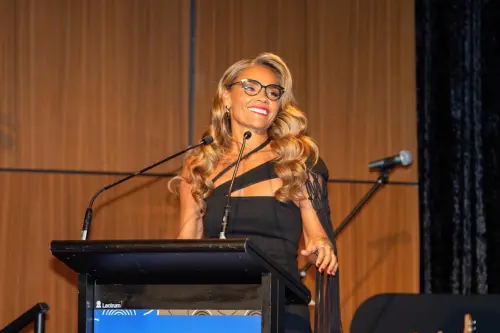
Wiradjuri woman Dr Sarah Jane Springer grew up in the central west New South Wales town of Mudgee, surrounded by family and Community on Wiradjuri Country.
Today she is a Rural Generalist and health leader who has spent more than two decades delivering clinical care across rural and remote Australia while advocating for stronger, culturally safe healthcare systems.
A dual Fellow of the Australian College of Rural and Remote Medicine and the Royal Australian College of General Practitioners, her clinical work has included general practice, emergency medicine and obstetrics. She was the first Aboriginal woman to achieve Fellowship of ACRRM and remained the only Aboriginal woman to hold that Fellowship for the following 12 years.
In 2025, Dr Springer received ACRRM’s Outstanding Contribution to First Nations Healthcare Award, recognising her work to improve equity, cultural safety and health outcomes for First Nations peoples.
Her journey into medicine began unexpectedly.
“I didn’t really have medicine on the radar,” she recalls.
“I didn’t think that I was smart enough. I didn’t even think that was an option for rural kids.”
That changed during a careers market in Dubbo while she was finishing high school.
Springer remembers walking past a stall promoting an Aboriginal and Torres Strait Islander entry pathway at the University of Newcastle and noticing faces that felt familiar.“I saw these beautiful Blak faces at the careers market and started having a yarn with them,” she says.
“They handed me a brochure, and I went back and talked to my parents and said maybe I’ll just give it a go.”
A door into medicine
For Springer, the decision to apply for medicine came from curiosity as much as confidence.
“I often talk about it as being young and silly enough to not actually understand the concept of failure,” she says.
“That probably held me in good stead at that stage of my life.”
Her interest in health had always been there.
At school she enjoyed health and physical education and was fascinated by the human body and how it worked.
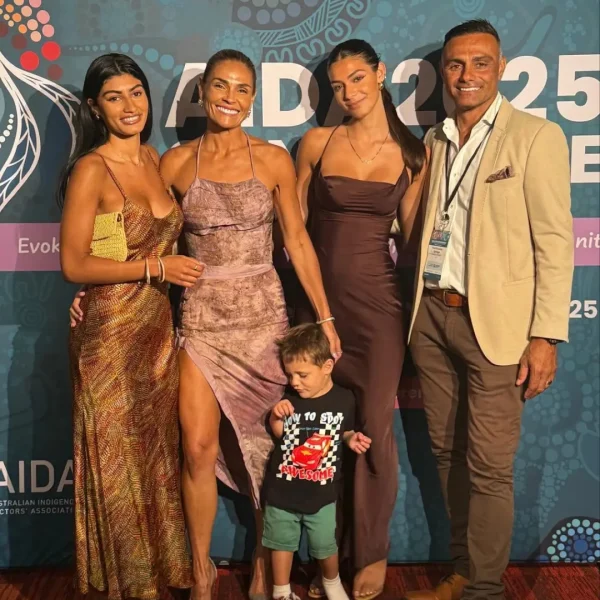
Family influences also played a role.
Her father volunteered in emergency response roles in the local Community.
“I remember the CB radios going off in the background and the energy in the house when he was responding to an emergency,” she says.
Looking back, she believes some of those memories helped shape her intention to pursue medicine and serve Community.
“I think some of those memories laid down my intention to do medicine and help Community.”
Designing the table
Dr Springer has now worked in medicine for more than 20 years.
Across that time, she has navigated and challenged systems that were not designed with Aboriginal and Torres Strait Islander doctors or communities in mind.
Alongside her clinical career, she has led and contributed to initiatives aimed at improving health systems for Aboriginal and Torres Strait Islander people.
One project she is particularly proud of is Cultural Safety: From Compliance to Commitment, a report she authored for A Better Culture.
Building on the work of the Cultural Safety Working Group, the report presents recommendations for cultural governance, culturally safe policy implementation, workforce wellbeing, and meaningful monitoring and evaluation grounded in Community perspectives.
“What we’re trying to do is move beyond tokenism,” she says.
“It’s about not just being invited to the table but designing the table and inviting the people that we want to have there.”
The power of Blak medicine
Dr Springer believes Aboriginal and Torres Strait Islander doctors can bring culturally grounded perspectives to healthcare.
“We do have different worldviews,” she explains. “We come with a different way of knowing, being and doing.”
In her own practice, that cultural lens shapes the way consultations unfold.
Rather than jumping straight to clinical questions, Dr Springer often begins with connection: understanding who someone is, who they are connected to and what strengths surround them.
“We might sit there for 10, 15, 20 minutes just yarning about connections and understanding where people sit in Community.”
She sees this culturally grounded lens as strengthening clinical care by bringing relationality and context into assessment and diagnosis.
For Dr Springer, those conversations are central to good medicine.
“That, to me, is the golden part of a consultation.”
From 75 to nearly 1,000
When Dr Springer graduated in 2004, she was one of approximately 75 Aboriginal and Torres Strait Islander doctors in Australia.
By March 2026, that number had grown to 973 registered medical practitioners identifying as Aboriginal and/or Torres Strait Islander.
“It’s incredible,” she says.
“When you think about that trajectory from around 75 back then to nearly 1,000 now, it’s really inspirational.”
She believes the milestone represents decades of advocacy and leadership.
At the same time, she says healthcare systems must continue evolving to support the growing workforce.
“We now have this group of doctors working within systems that weren’t designed for them.”
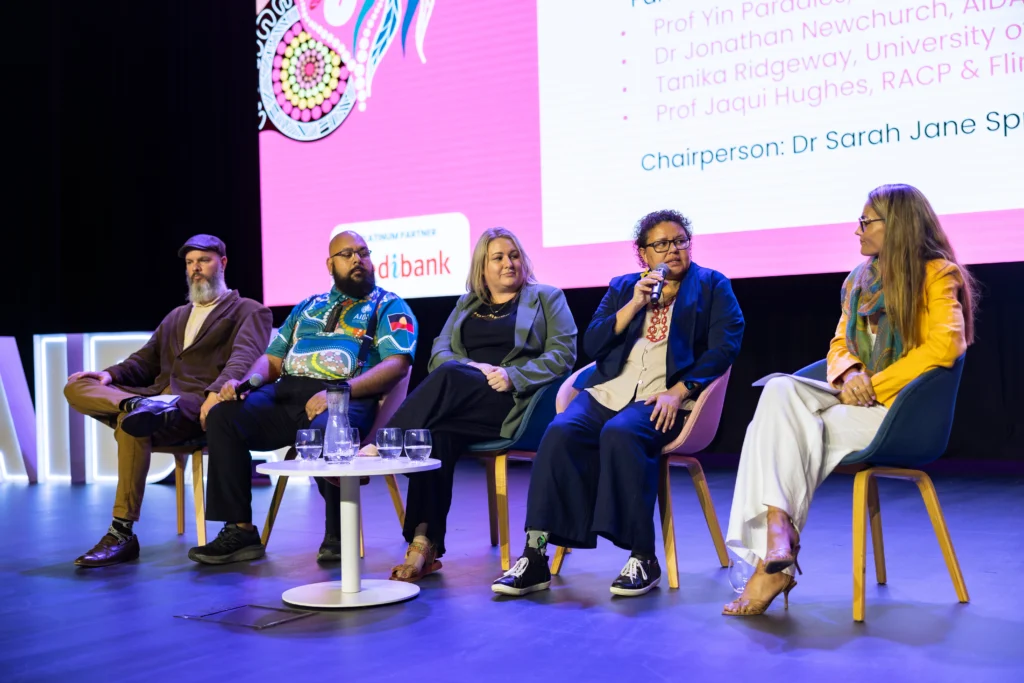
That reality creates an ongoing tension, with a growing workforce entering systems that are still catching up to the needs, values and wellbeing of the people within them.
For Dr Springer, the next step is ensuring those systems change.
“We need to continue to advocate to be the designers of the table.”
Stronger together
For Dr Springer, AIDA plays an important role in supporting Aboriginal and Torres Strait Islander doctors.
“AIDA provides a platform for us to connect with each other and bring our collective voice together,” she says.
It also creates opportunities to learn from one another.
“We leverage off each other’s strengths and bring that into the work that we’re trying to do.”
That connection helps sustain both the work and the people behind it, particularly in a system that can still be challenging to navigate. For Dr Springer, that collective strength provides genuine grounds for optimism. “I feel the shift,” she says. “I feel that we’ve gone from places of real darkness, and I’m starting to see the speckles of light.”