
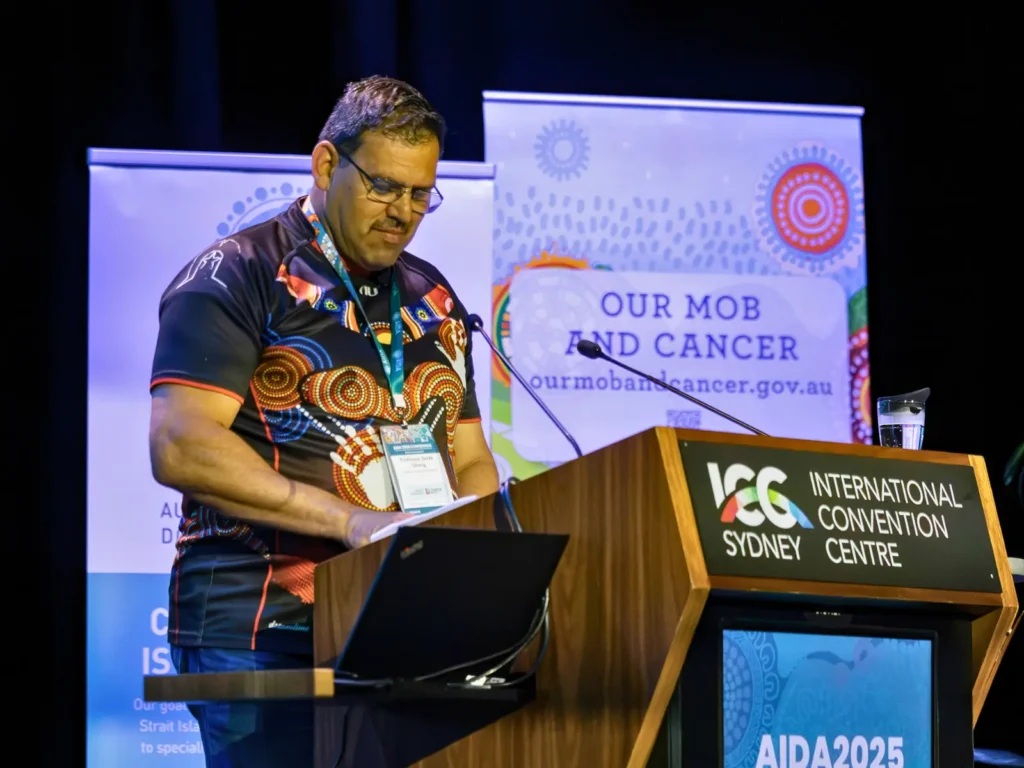
Psychiatrist Professor Derek Chong traces his roots to Mununjali Country through his mother’s family and to the Kunjin peoples from Kowanyama Country through his father’s side. In this Let’s Yarn conversation, he reflects on persistence, culture and the responsibility of Aboriginal and Torres Strait Islander doctors carry to advocate for their Communities.
Psychiatrist Professor Derek Chong traces his roots to Mununjali Country through his mother’s family and to the Kunjin peoples from Kowanyama Country through his father’s side.
Today he works across prison mental health services and private practice, bringing decades of experience in psychiatry and a deep commitment to improving health outcomes for Aboriginal and Torres Strait Islander peoples.
His interest in medicine began unexpectedly.
“It was actually The Bill Cosby Show,” Professor Chong laughs.
The program featured a married couple who were both doctors, and the idea stayed with him.
“I thought, wow, that’d be really good.”
But when he raised the idea of becoming a doctor at school, the response was discouraging.
“My guidance officer said, ‘Your people are better with their hands, and no one’s ever become a doctor from this school,’” he recalls.
Finding another pathway
Despite that early setback, the idea of medicine stayed with him.
During Year 12, Professor Chong was couch surfing between family members’ homes while finishing school.
At the local Aboriginal Medical Service, an Aboriginal nursing sister told him about the Indigenous entry program at the University of Newcastle.
“She said, ‘Derek, they’ve got a special entry program for Indigenous students.’”
Professor Chong applied but narrowly missed the entry score.
Rather than giving up, he repeated Year 12.
“I gave up sport and just studied,” he recalls. “I got the marks and got into Newcastle.”
A longer journey into medicine
Professor Chong’s pathway into medicine did not follow a straight line.
Financial pressures meant stepping away from university to work and support his growing family.
“I got married and had kids,” he says.
Years later he returned to university and eventually completed his medical degree at the University of Queensland.
“It’s been a long journey with eight children, a mortgage and private schooling,” he shares.
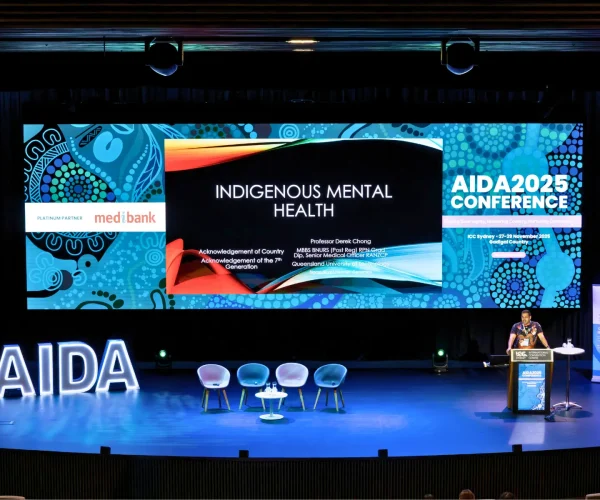
Finding purpose in psychiatry
Although he initially planned to work as a rural GP, Professor Chong discovered a passion for psychiatry while working as a psychiatric nurse.
That experience exposed the inequalities faced by many patients.
“The most discriminated clients were Aboriginal women with mental illness,” he says.
“I come from a long line of strong Blak women.”
Recognising those disparities shaped the direction of his career.
“I realised psychiatry was where I could advocate,” he says.
Today Professor Chong works in prison mental health services and private practice, supporting patients with complex mental health needs.
For Professor Chong, one of the most rewarding parts of his work is the connection he builds with patients.
Working in prison mental health, those moments of recognition can be powerful.
“They’re just overwhelmed that I do know: not just where they’re from, not just their culture, but their stories, their generational trauma, history, and stories of resilience,” he says.
“That’s a satisfying thing for me to make that connection, I feel they can share what they really want to share.”
Culture at the centre of care
For Professor Chong, culture is central to the way he approaches medicine.
“Culture is who you are,” he explains.
Consultations often begin with conversation about where people come from and their connections to Community.
“I tell them where I’m from, who my people are,” he shares. “They tell me where their people are from.
These conversations help build trust and connection.
“It’s about safety,” he says. “It builds trust.”
The role of Aboriginal and Torres Strait Islander doctors
Professor Chong believes Aboriginal and Torres Strait Islander doctors bring important perspectives into healthcare.
“We do things a little bit differently,” he says.
That perspective can strengthen relationships with patients and Communities.
“Aboriginal doctors can bring Communities together and become an advocate and voice.”
Education, he says, plays a central role in that change.
“My great-grandfather used to say education is the key for us to actually be at the table when people are making decisions about us.”
Community and mentoring
For Professor Chong, mentoring the next generation of Aboriginal and Torres Strait Islander doctors is essential.
“There’s a big gap between seeing a role model and actually taking those steps yourself,” he says.
Supporting students through that journey is critical.
Medicine, he says, is about more than clinical practice.
“It’s about social justice.”
“It’s about supporting the mental health and wellbeing of young people coming through.”